

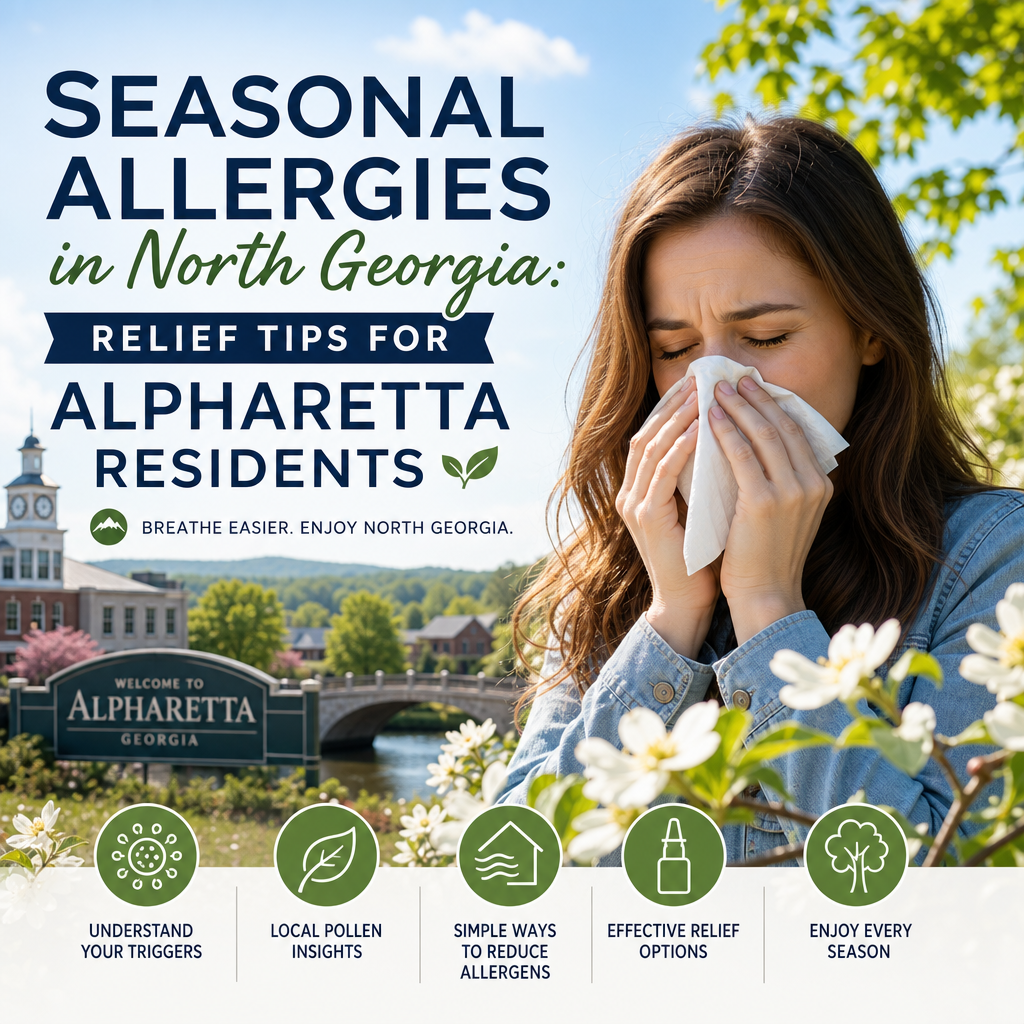
Seasonal Allergies in North Georgia: Relief Tips for Alpharetta Residents
Seasonal Allergies in North Georgia: Relief Tips for Alpharetta Residents
If spring and fall leave you sneezing, congested, and tired, you are not alone. Seasonal allergies in North Georgia are a common problem, especially for people living in areas like Alpharetta where pollen levels can rise quickly. Trees, grasses, and weeds all contribute to allergy symptoms throughout the year, making it difficult for many residents to enjoy time outdoors.
Knowing what triggers your symptoms and how to manage them can make a big difference. Here are practical relief tips to help Alpharetta residents get through allergy season more comfortably.
Why Allergies Are So Common in Alpharetta
North Georgia has a long growing season, mild winters, and plenty of plant life. While that makes the area beautiful, it also creates ideal conditions for airborne allergens.

Common triggers in Alpharetta include:
- Tree pollen in late winter and spring
- Grass pollen in late spring and summer
- Weed pollen in late summer and fall
- Mold spores after rainy or humid weather
Because temperatures can warm up early in Georgia, pollen season may start sooner than expected. On dry, windy days, allergens can spread even more easily.
Common Symptoms of Seasonal Allergies
Seasonal allergies can feel a lot like a cold, but they usually last longer and follow a pattern tied to pollen exposure.
Watch for these signs:
- Sneezing
- Runny or stuffy nose
- Itchy eyes, nose, or throat
- Watery eyes
- Postnasal drip
- Coughing
- Sinus pressure
- Fatigue
If symptoms show up around the same time each year, seasonal allergies in North Georgia may be the cause.
How to Reduce Exposure to Pollen
One of the best ways to control allergy symptoms is to limit contact with allergens whenever possible. Even small changes in your routine can help.
1. Check the Daily Pollen Count
Before heading outside, look at local pollen forecasts for Alpharetta. On high-pollen days, try to limit outdoor activities, especially in the morning when pollen levels are often highest.
2. Keep Windows Closed
Open windows may bring in fresh air, but they also invite pollen indoors. Use air conditioning in your home and car instead.
3. Shower After Being Outdoors
Pollen can stick to your skin, hair, and clothing. A quick shower and change of clothes after spending time outside can prevent allergens from spreading through your home.
4. Wash Bedding Often
Sheets, pillowcases, and blankets can collect pollen over time. Washing them regularly in hot water may reduce nighttime symptoms.
5. Use HEPA Filters
High-quality air filters can help remove allergens from indoor air. Consider using a HEPA filter in your HVAC system or a portable air purifier in the bedroom.
Over-the-Counter Relief Options
Many people find symptom relief with nonprescription allergy treatments. These can be especially helpful when used early in the season before symptoms become severe.
Common options include:
- Antihistamines to reduce sneezing, itching, and runny nose
- Nasal corticosteroid sprays to ease inflammation and congestion
- Decongestants for temporary relief of stuffiness
- Saline nasal rinses to flush pollen and mucus from nasal passages
- Eye drops for itchy, watery eyes
Always follow label directions and talk with a healthcare provider if you have other medical conditions or take prescription medications.
Lifestyle Habits That Can Help
Managing allergies is not only about medication. Daily habits also play a role in how you feel during peak pollen season.
Helpful habits for allergy season:
- Stay hydrated to help thin mucus
- Wear sunglasses outdoors to protect your eyes
- Avoid mowing the lawn or raking leaves if you are sensitive to pollen
- Wear a mask when doing yard work
- Keep pets clean, since they can carry pollen indoors on their fur
For many Alpharetta families, outdoor sports, walks, and backyard activities are part of daily life. Planning those activities for lower-pollen times, such as after rain or later in the day, may help reduce symptoms.
When to See a Doctor
Sometimes seasonal allergies become more than just a nuisance. If your symptoms are frequent, severe, or interfering with sleep and daily activities, it may be time to get professional help.
Consider seeing a doctor if:
- Over-the-counter medicine is not working
- You have ongoing sinus infections
- You wheeze or have trouble breathing
- Symptoms are affecting school, work, or sleep
- You are not sure whether it is allergies or another condition
An allergy specialist can help identify specific triggers and recommend a treatment plan. In some cases, allergy testing or immunotherapy may offer longer-term relief.
Finding Relief During North Georgia Allergy Season
Living with seasonal allergies in North Georgia can be frustrating, but symptoms do not have to take over your routine. For Alpharetta residents, a combination of prevention, indoor air control, and the right treatment can make allergy season much easier to manage.
By paying attention to pollen levels, reducing exposure, and getting help when needed, you can spend less time battling symptoms and more time enjoying everything Alpharetta has to offer.