

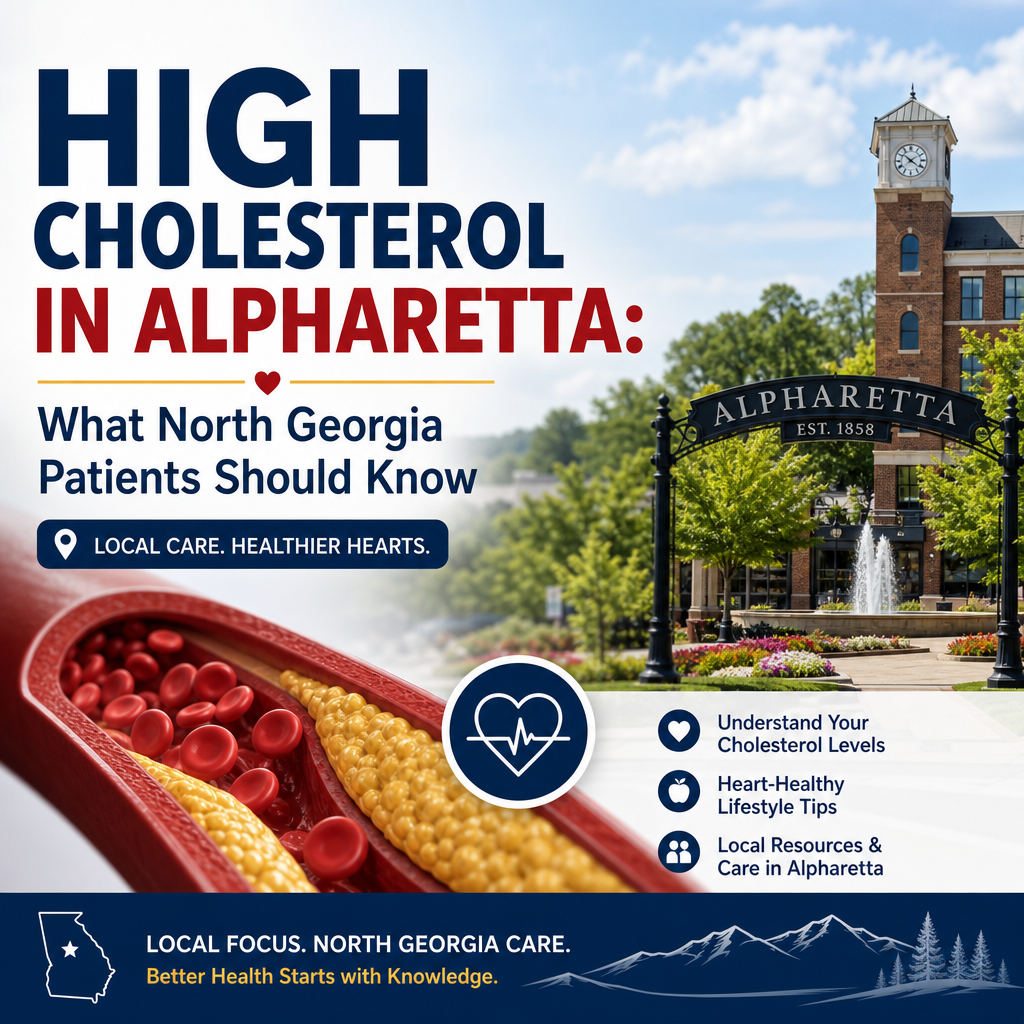
High Cholesterol in Alpharetta: What North Georgia Patients Should Know
High Cholesterol in North Georgia: What Alpharetta Patients Need to Know
High cholesterol is one of the most common risk factors for heart disease, yet many people in Alpharetta and across North Georgia do not realize they have it. It usually has no clear symptoms, which is why it is often called a “silent” condition. A person can feel healthy, stay active, and still have cholesterol levels that increase the risk of heart attack or stroke.
For Alpharetta patients, understanding high cholesterol in North Georgia is an important step toward protecting long-term heart health. The good news is that cholesterol can often be managed with a combination of regular screening, lifestyle changes, and medical care when needed.
What High Cholesterol Actually Means
Cholesterol is a waxy substance your body uses to build cells and produce hormones. Your liver makes the cholesterol you need, but cholesterol also comes from certain foods.
There are two main types people hear about most often:
- LDL cholesterol: Often called “bad” cholesterol because high levels can lead to plaque buildup in the arteries
- HDL cholesterol: Known as “good” cholesterol because it helps remove excess cholesterol from the bloodstream
Another important number is triglycerides, a type of fat in the blood that can also affect heart health.
When LDL or triglycerides are too high, plaque can begin to narrow the arteries. Over time, this makes it harder for blood to flow properly and raises the risk of serious cardiovascular problems.
Why It Matters for Alpharetta Patients
Heart disease remains a major health concern throughout Georgia, and high cholesterol plays a big role. In growing communities like Alpharetta, many adults juggle busy work schedules, long commutes, family obligations, and stress. These factors can make it harder to maintain healthy eating habits, exercise regularly, and stay on top of preventive care.
Several local lifestyle patterns may contribute to high cholesterol in North Georgia, including:
- Frequent dining out or relying on convenience foods
- Sedentary office jobs
- Limited time for regular exercise
- Family history of cholesterol problems or heart disease
- Conditions such as diabetes, obesity, or high blood pressure
Even people who appear fit can have elevated cholesterol due to genetics, so regular testing is essential.
Common Risk Factors to Know
Some causes of high cholesterol can be changed, while others cannot.
Risk factors you can manage
- Diet high in saturated fats, fried foods, or processed foods
- Lack of physical activity
- Smoking
- Excess alcohol use
- Being overweight or obese
Risk factors you cannot control
- Family history of high cholesterol
- Age
- Certain inherited conditions
- Menopause or hormonal changes in some women
Because cholesterol issues often run in families, Alpharetta patients with a parent or sibling who has heart disease should be especially proactive about screening.
Signs and Symptoms: Usually None
One of the biggest challenges with high cholesterol is that it usually does not cause symptoms. You generally will not feel different when your cholesterol rises. Many people only learn they have a problem after routine lab work or after developing related conditions.
That is why preventive checkups matter. A simple blood test can provide important information before damage occurs.
When to Get Your Cholesterol Checked
Adults should talk with their healthcare provider about how often to have cholesterol tested. The right schedule depends on age, personal health history, and risk factors.
In general, screening is especially important if you:
- Are over age 40
- Have high blood pressure or diabetes
- Smoke
- Are overweight
- Have a family history of heart disease
- Have had abnormal cholesterol levels in the past
For many Alpharetta patients, annual wellness visits are a good time to review cholesterol numbers and overall heart risk.
How High Cholesterol Is Treated
Treatment depends on how high your numbers are and whether you have other cardiovascular risk factors.
Lifestyle changes
For many people, the first step is improving daily habits, such as:
- Eating more fruits, vegetables, whole grains, and lean proteins
- Limiting fried foods, fatty meats, and highly processed snacks
- Choosing healthy fats like olive oil, nuts, and avocado
- Exercising at least 150 minutes per week
- Losing excess weight if needed
- Quitting smoking
Even modest changes can make a meaningful difference over time.
Medication
If lifestyle changes are not enough, a provider may recommend medication such as a statin. These medicines help lower LDL cholesterol and reduce the risk of heart attack and stroke. Medication is often most helpful for patients with very high cholesterol, diabetes, known heart disease, or significant family history.
Practical Steps for Better Heart Health in North Georgia
If you are concerned about high cholesterol in North Georgia, start with simple, realistic actions:
- Schedule a cholesterol screening if you have not had one recently
- Review your numbers with a healthcare provider, not just the lab report
- Make one or two sustainable diet changes instead of trying to overhaul everything at once
- Add movement to your week, even if it starts with walking
- Follow up regularly to track progress
The Bottom Line
High cholesterol is common, manageable, and often preventable. For Alpharetta patients, early detection is the key to lowering long-term cardiovascular risk. Because symptoms are rare, routine testing and consistent medical care are some of the best tools for staying healthy.
If you live in Alpharetta or elsewhere in North Georgia, do not wait for warning signs. Knowing your cholesterol numbers now can help you protect your heart for years to come.
