
Seasonal Allergy Survival Guide for Alpharetta Residents in 2026
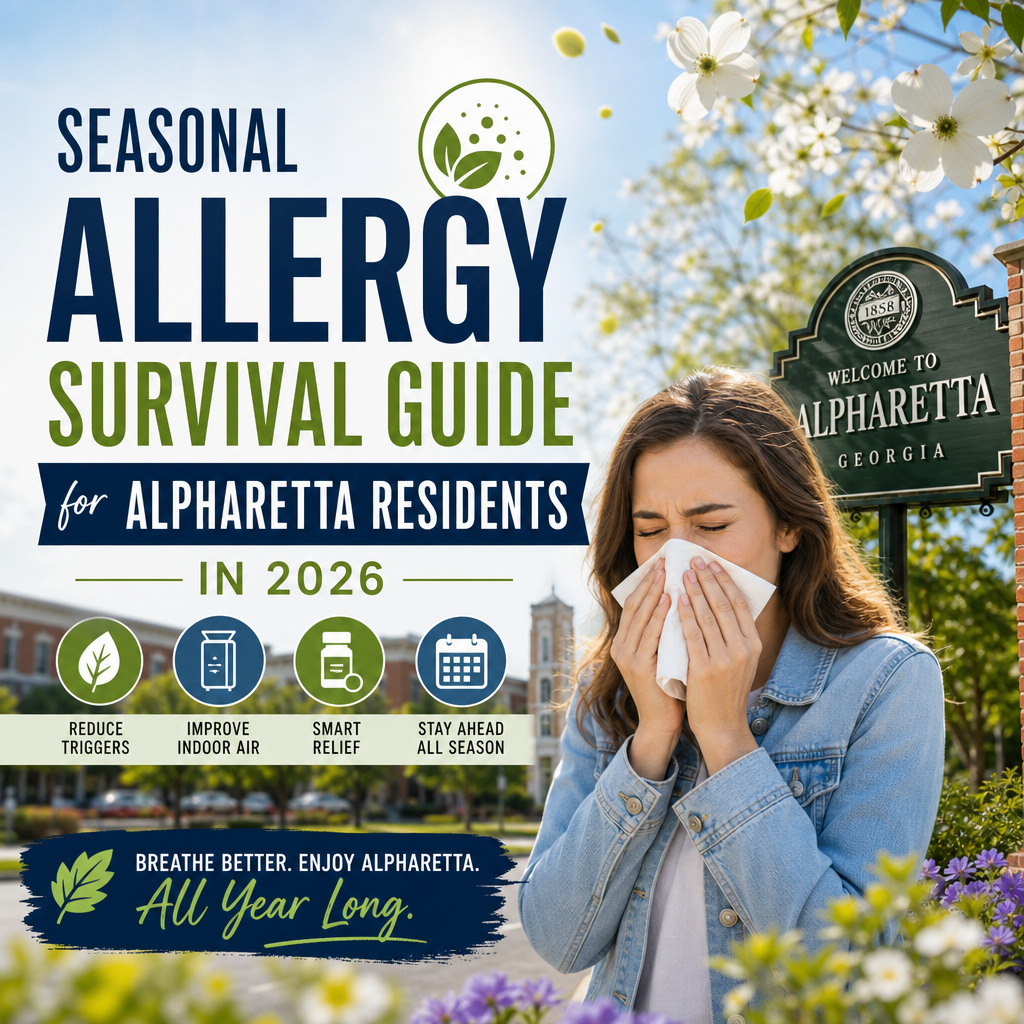
Seasonal Allergy Survival Guide for Alpharetta Residents in 2026
Seasonal allergies can turn a beautiful Alpharetta spring or fall into weeks of sneezing, itchy eyes, and constant congestion. With North Georgia’s long pollen seasons and changing weather patterns, many families are looking for better ways to manage symptoms before they spiral.
This Seasonal Allergy Survival Guide for Alpharetta Residents in 2026 covers what to expect, how to reduce exposure, and when it may be time to get extra help.
Why Seasonal Allergies Hit Hard in Alpharetta
Alpharetta residents deal with a mix of tree pollen in spring, grass pollen in late spring and summer, and ragweed in late summer and fall. Add in humidity, sudden rain, and mold growth, and symptoms can linger longer than expected.

In 2026, allergy seasons may feel even less predictable. Warmer winter stretches and early blooms can cause pollen counts to rise sooner, while windy days spread allergens quickly across neighborhoods, parks, and trails.
Common triggers in the area include:
- Tree pollen from oak, pine, birch, and maple
- Grass pollen during warmer months
- Ragweed in late summer and early fall
- Outdoor mold after rain and humidity spikes
Most Common Allergy Symptoms
Seasonal allergies can look different from person to person. Some people deal with mild irritation, while others struggle with fatigue and sleep disruption.
Watch for these signs:
- Sneezing fits
- Runny or stuffy nose
- Itchy eyes, nose, or throat
- Watery eyes
- Postnasal drip
- Coughing
- Sinus pressure
- Trouble sleeping
- Worsening asthma symptoms
If symptoms repeat around the same time each year, allergies may be the cause rather than a cold.
How to Reduce Pollen Exposure at Home
One of the best ways to manage symptoms is to limit how much pollen makes it indoors. Even a few simple habits can make a noticeable difference.
Smart home habits for allergy season
- Keep windows closed on high-pollen days
- Run air conditioning instead of opening doors and windows
- Change HVAC filters regularly
- Use a HEPA air purifier in bedrooms or living areas
- Shower and change clothes after spending time outside
- Wash bedding often in hot water
- Wipe down pets if they’ve been outdoors
Pollen can cling to shoes, jackets, backpacks, and pet fur. A quick cleanup routine after outdoor activities helps prevent allergens from spreading through the house.
Best Times to Be Outdoors in Alpharetta
You do not have to stay inside all season, but timing matters. Pollen counts are often higher in the early morning and on dry, windy days.
Try these outdoor strategies:
- Plan walks or errands later in the day when possible
- Limit yard work on high-pollen days
- Wear sunglasses outdoors to reduce eye irritation
- Use a hat to keep pollen out of your hair
- Consider a mask when mowing, gardening, or blowing leaves
Checking a reliable pollen forecast before heading out can help you adjust your plans. In 2026, many weather and health apps make it easy to track local pollen and air quality in real time.
Helpful Daily Habits for Symptom Relief
Consistency usually works better than waiting until symptoms are severe. Many people feel better when they build a daily routine during peak allergy months.
A practical allergy routine
- Check the local pollen count in the morning
- Take allergy medication as directed, if recommended by your healthcare provider
- Keep indoor air clean and cool
- Rinse your face and hands after outdoor exposure
- Change clothes before relaxing on furniture or bedding
- Stay hydrated to help with throat and sinus irritation
Saline nasal rinses may also help clear allergens from nasal passages. For some residents, combining medication with indoor air control offers the best relief.
Protecting Kids and Active Families
Alpharetta families spend a lot of time outdoors at parks, sports fields, and community events. That is great for health and fun, but it can also increase pollen exposure.
For children, allergy symptoms may show up as mouth breathing, poor sleep, constant nose rubbing, or irritability. If your child seems to have “cold symptoms” for weeks without a fever, seasonal allergies could be part of the issue.
Helpful steps for families include:
- Packing tissues and allergy-safe eye drops when approved by a doctor
- Having kids wash up after recess or sports
- Keeping sports gear out of bedrooms
- Monitoring symptoms during peak pollen seasons
When to Seek Professional Help
Sometimes home strategies are not enough. If symptoms interfere with work, school, sleep, or daily comfort, it may be time to talk with a medical professional.
Consider getting help if you have:
- Symptoms that last for weeks or keep returning
- Frequent sinus infections
- Wheezing or shortness of breath
- Poor sleep due to congestion
- Little relief from over-the-counter options
- Symptoms that affect focus, energy, or quality of life
An allergy specialist may recommend testing, personalized treatment plans, or longer-term options for better control.
Final Thoughts
Living in North Fulton means enjoying beautiful outdoor spaces, but it also means dealing with long allergy seasons. With the right habits, better timing, and a plan for high-pollen days, you can stay more comfortable throughout the year.
This Seasonal Allergy Survival Guide for Alpharetta Residents in 2026 is a reminder that small changes can make a big difference. When you know your triggers and prepare early, seasonal allergies become much easier to manage.