

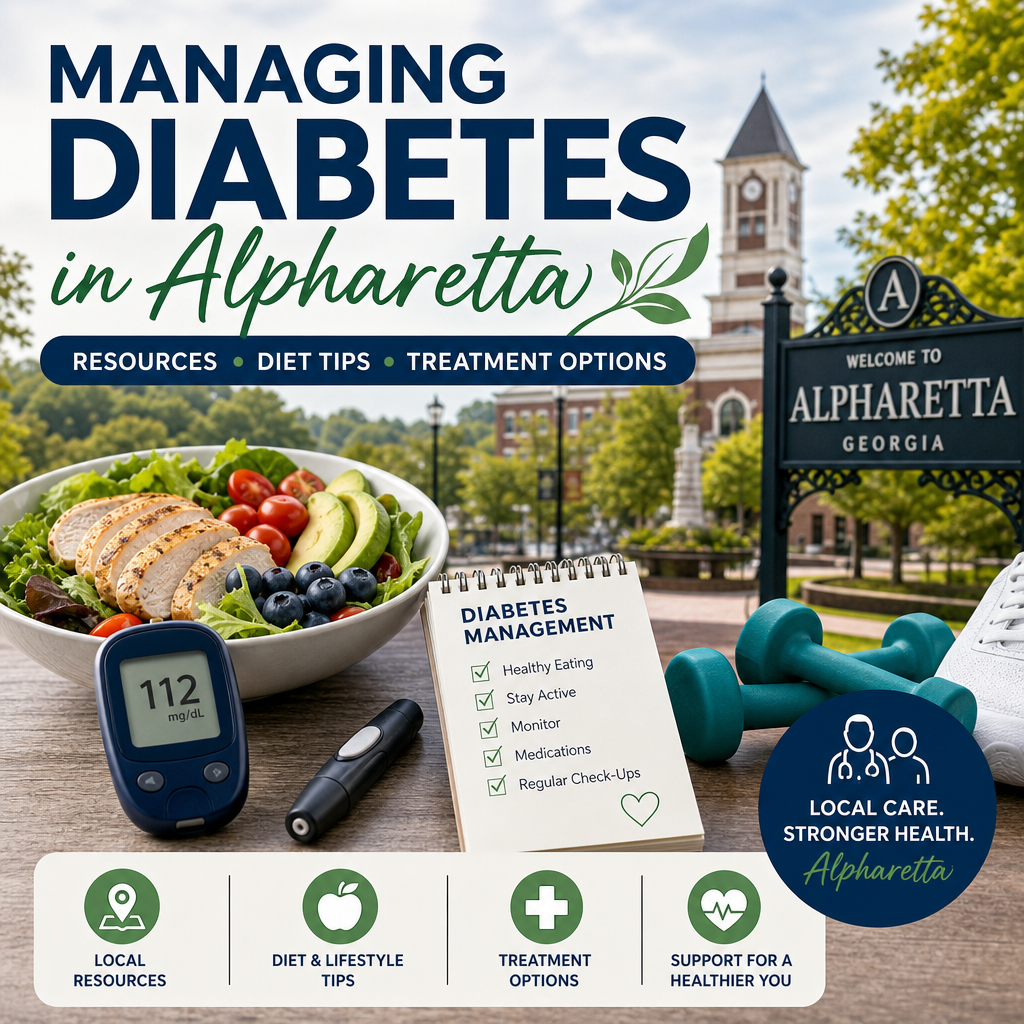
Managing Diabetes in Alpharetta: Resources, Diet Tips, Treatment Options
Managing Diabetes in Alpharetta: A Local Guide to Better Daily Care
Living with diabetes takes ongoing attention, but having the right support can make day-to-day management much easier. For individuals and families looking for practical help, managing diabetes in Alpharetta means combining medical care, healthy food choices, regular movement, and local community resources.
Whether you are newly diagnosed or have been living with diabetes for years, a strong plan can help you maintain stable blood sugar, reduce complications, and feel more in control of your health.
Why Diabetes Management Matters
Diabetes affects how your body uses glucose for energy. When blood sugar stays too high for too long, it can increase the risk of serious health problems such as:

- Heart disease
- Kidney damage
- Nerve pain
- Vision issues
- Foot complications
The good news is that consistent care can make a major difference. With the right treatment, lifestyle changes, and routine checkups, many people live active and healthy lives.
Local Resources for Managing Diabetes in Alpharetta
One of the biggest advantages of living in Alpharetta is access to quality healthcare and wellness services. Local support can help you build a realistic, sustainable plan.
Primary Care and Endocrinology Support
A primary care physician is often the first step in diabetes care. They can monitor blood sugar, order lab work, review medications, and refer you to a specialist if needed.
For more complex cases, an endocrinologist can help manage:
- Type 1 diabetes
- Type 2 diabetes that is difficult to control
- Insulin adjustments
- Hormonal issues affecting blood sugar
Look for providers in the Alpharetta area who offer coordinated diabetes management and regular follow-up appointments.
Diabetes Education Programs
Certified diabetes educators and nutrition counselors can be especially valuable. These professionals help patients understand:
- How to monitor blood glucose
- When to take medication
- How food impacts blood sugar
- How to prevent highs and lows
- How to create a daily routine that works
Hospitals, medical groups, and specialty clinics in and around Alpharetta may offer classes or one-on-one counseling.
Fitness and Community Wellness Options
Exercise plays an important role in blood sugar control. Alpharetta offers many ways to stay active, from walking trails and parks to gyms and wellness studios.
Popular activities that support diabetes management include:
- Walking at local greenways
- Strength training
- Group fitness classes
- Swimming
- Low-impact yoga
Even 20 to 30 minutes of movement most days can improve insulin sensitivity and overall health.
Diet Tips for Better Blood Sugar Control
Healthy eating does not have to be complicated. The goal is to choose foods that support steady energy and help prevent major blood sugar spikes.
Focus on Balanced Meals
A simple way to build meals is to include:
- Non-starchy vegetables
- Lean protein
- High-fiber carbohydrates
- Healthy fats
Examples include grilled chicken with roasted vegetables, salmon with brown rice, or a salad topped with beans, avocado, and olive oil.
Choose Smarter Carbohydrates
Carbs have the biggest effect on blood sugar, but they do not need to be eliminated. Instead, focus on better-quality sources such as:
- Whole grains
- Beans and lentils
- Sweet potatoes
- Berries
- Apples
- Plain Greek yogurt
Try to limit heavily processed foods like white bread, sugary cereal, pastries, and sweetened drinks.
Plan for Dining Out in Alpharetta
Eating out is part of life, and it can still fit into a diabetes-friendly routine. When ordering at local restaurants:
- Choose grilled, baked, or roasted options
- Ask for dressings and sauces on the side
- Swap fries for vegetables or a side salad
- Watch portion sizes
- Limit sugary beverages
Reviewing the menu ahead of time can also help you make a balanced choice without feeling rushed.
Treatment Options to Consider
Diabetes treatment is not one-size-fits-all. Your care plan depends on the type of diabetes you have, your current health, and how your body responds over time.
Lifestyle Changes
For many people, especially those with prediabetes or type 2 diabetes, lifestyle changes are a key part of treatment. These often include:
- Improving food choices
- Increasing physical activity
- Losing excess weight if recommended
- Improving sleep
- Managing stress
These steps can work alongside medication or, in some cases, significantly reduce the need for it.
Oral Medications and Injectables
Some patients benefit from oral diabetes medications that help lower blood sugar or improve insulin sensitivity. Others may use non-insulin injectable medications that can support blood sugar control and weight management.
It is important to take medications exactly as prescribed and discuss any side effects with your healthcare provider.
Insulin Therapy and Glucose Monitoring
People with type 1 diabetes and some with type 2 diabetes may need insulin therapy. Today, treatment tools are more advanced than ever and may include:
- Insulin pens
- Insulin pumps
- Continuous glucose monitors (CGMs)
- Traditional finger-stick testing
These options can make daily care more precise and more manageable.
Building a Sustainable Plan
The most effective approach to managing diabetes in Alpharetta is one that fits your real life. That means setting realistic goals, tracking your progress, and leaning on local support when needed.
Start small if necessary. A few practical steps can go a long way:
- Schedule regular medical visits
- Keep a simple food and glucose log
- Walk several times each week
- Learn which foods work best for your body
- Ask for help from local professionals and educators
Final Thoughts
Diabetes management is a long-term commitment, but you do not have to handle it alone. With access to experienced providers, nutrition guidance, fitness opportunities, and supportive routines, managing diabetes in Alpharetta can become more approachable and effective.
The key is consistency. Small, steady actions each day can lead to better blood sugar control, greater confidence, and improved overall health.