

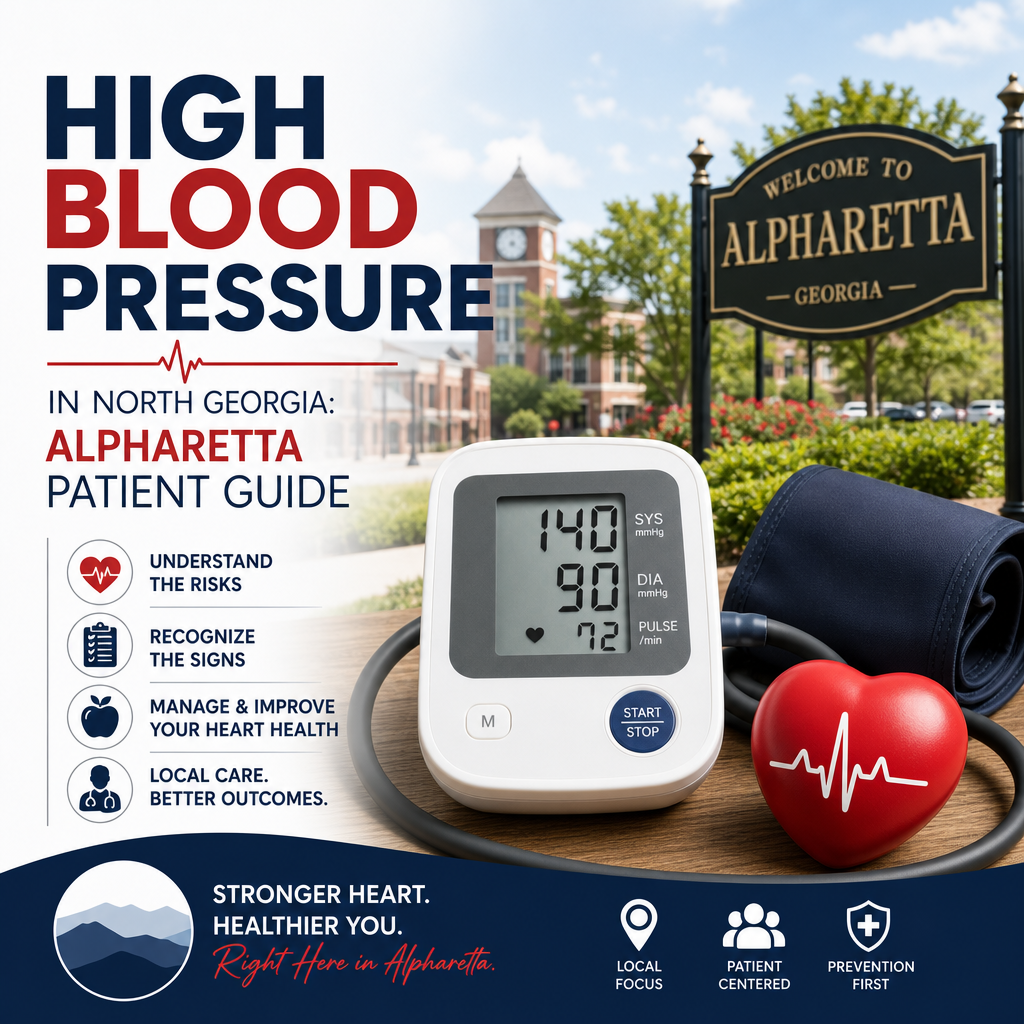
High Blood Pressure in North Georgia: Alpharetta Patient Guide
High Blood Pressure in North Georgia: What Alpharetta Patients Need to Know
High blood pressure is one of the most common health concerns affecting adults in North Georgia, and many people in Alpharetta may not even realize they have it. Often called a “silent” condition, high blood pressure can develop without obvious symptoms while still damaging the heart, brain, kidneys, and blood vessels over time.
Understanding the risks, causes, and warning signs can help Alpharetta patients take action early and protect their long-term health.
What Is High Blood Pressure?
Blood pressure measures how strongly blood pushes against the walls of your arteries. When that pressure stays too high for too long, it forces the heart to work harder and increases the risk of serious complications.
A normal reading is generally around 120/80 mmHg. Blood pressure that remains elevated above the healthy range may need monitoring, lifestyle changes, or medical treatment.
Why It Matters
Untreated high blood pressure can raise the risk of:
- Heart attack
- Stroke
- Heart failure
- Kidney disease
- Vision problems
- Memory and cognitive decline
Because symptoms may not appear until damage has already occurred, regular screening is essential.
Why High Blood Pressure Is a Concern in North Georgia
High blood pressure in North Georgia is influenced by many of the same factors seen across the country, but local lifestyle patterns can also play a role. Busy schedules, long commutes, stress, limited exercise, and diets high in sodium and processed foods can all contribute.
In growing communities like Alpharetta, many adults balance demanding jobs, family responsibilities, and limited time for preventive care. That can make it easy to delay checkups or overlook rising blood pressure until it becomes a bigger issue.
Seasonal heat and humidity may also affect hydration and cardiovascular strain, especially for older adults or people with existing heart conditions.
Common Risk Factors for Alpharetta Patients
Anyone can develop high blood pressure, but some people face a higher risk than others.
Key Risk Factors Include:
- Family history of high blood pressure
- Being overweight or obese
- Lack of regular physical activity
- High-sodium diet
- Smoking or tobacco use
- Excess alcohol intake
- Chronic stress
- Diabetes
- High cholesterol
- Sleep apnea
- Age, especially over 40
For many patients, high blood pressure is caused by a combination of factors rather than one single issue.
Signs and Symptoms to Watch For
One of the biggest challenges with high blood pressure is that it often has no clear symptoms. Many people feel completely fine even when their numbers are dangerously high.
However, in some cases, severe or uncontrolled high blood pressure may cause:
- Headaches
- Dizziness
- Blurred vision
- Chest pain
- Shortness of breath
- Nosebleeds
These symptoms do not always mean high blood pressure is present, but they should never be ignored. If chest pain, sudden weakness, confusion, or trouble speaking occurs, seek emergency medical care right away.
How High Blood Pressure Is Diagnosed
Diagnosis usually starts with a blood pressure reading taken during a routine medical visit. Because blood pressure can fluctuate, your provider may recommend multiple readings over time or ask you to monitor it at home.
Your Provider May Also Check:
- Heart health
- Kidney function
- Cholesterol levels
- Blood sugar
- Weight and body mass index
- Lifestyle and family history
A full evaluation helps determine whether elevated blood pressure is temporary, lifestyle-related, or part of a chronic condition that needs treatment.
Ways to Lower Blood Pressure Naturally
Many Alpharetta patients can improve their blood pressure with healthy daily habits. Even small changes can make a meaningful difference.
Helpful Lifestyle Steps
Eat a heart-healthy diet
Focus on fruits, vegetables, whole grains, lean proteins, and low-fat dairy. Reducing sodium is especially important.
Stay active
Aim for at least 150 minutes of moderate exercise each week. Walking, cycling, swimming, and strength training can all help.
Maintain a healthy weight
Losing even a modest amount of weight may lower blood pressure.
Manage stress
Stress does not always directly cause hypertension, but it can contribute to unhealthy habits and short-term spikes.
Limit alcohol and avoid smoking
Both can increase cardiovascular risk and make blood pressure harder to control.
Improve sleep
Poor sleep quality and sleep apnea are commonly linked to high blood pressure.
When Medication May Be Needed
Lifestyle changes are important, but they are not always enough. Some patients in Alpharetta may need medication to bring blood pressure into a safer range.
Your provider may recommend medication if:
- Blood pressure remains high despite lifestyle changes
- Readings are significantly elevated
- You have diabetes, kidney disease, or heart disease
- Your risk of stroke or heart attack is higher
Medication plans are individualized, and regular follow-up is important to make sure treatment is working well.
When to See a Doctor in Alpharetta
If you have not had your blood pressure checked recently, now is a good time to schedule a visit. Early detection can prevent serious complications later.
You should especially talk with a healthcare provider if you:
- Have a family history of hypertension
- Notice repeated high readings at home
- Have headaches, dizziness, or chest discomfort
- Are over 40 and have not had a recent wellness exam
- Have diabetes, kidney disease, or high cholesterol
Take High Blood Pressure Seriously
High blood pressure in North Georgia is a common but manageable condition. For Alpharetta patients, the most important step is not to wait for symptoms. Regular screenings, healthier habits, and timely medical care can go a long way toward protecting your heart and overall health.
The earlier high blood pressure is identified, the easier it is to control—and the better your chances of avoiding long-term complications.