
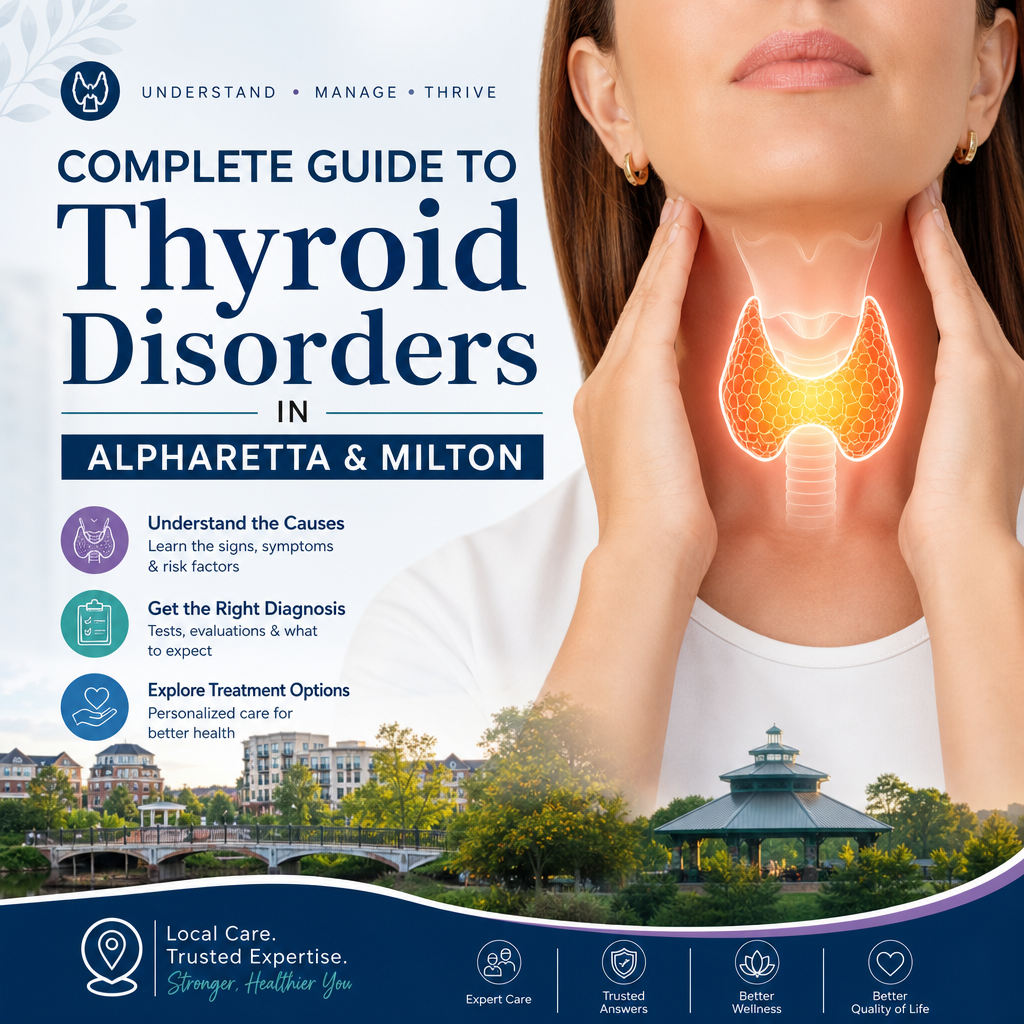
Complete Guide to Thyroid Disorders in Alpharetta and Milton
A Complete Guide to Thyroid Disorders for Patients in Alpharetta and Milton
Thyroid disorders are common, but many people do not realize how much this small gland affects everyday health. Located at the front of the neck, the thyroid helps control metabolism, energy levels, body temperature, heart rate, and even mood. When it does not work properly, symptoms can develop slowly and be easy to overlook.
For patients in Alpharetta and Milton, understanding the signs, causes, and treatment options for thyroid disorders can make it easier to seek care early and feel better sooner.
What Is the Thyroid and Why Does It Matter?
The thyroid is a butterfly-shaped gland that produces hormones responsible for regulating many body functions. These hormones help the body use energy efficiently and keep important systems working smoothly.

When the thyroid makes too much hormone or too little, it can affect nearly every part of the body. That is why thyroid disorders can cause such a wide range of symptoms.
Common Types of Thyroid Disorders
There are several kinds of thyroid disorders, but the most common include:
Hypothyroidism
Hypothyroidism happens when the thyroid does not produce enough hormone. This can slow the body down and lead to symptoms such as:
- Fatigue
- Weight gain
- Dry skin
- Constipation
- Feeling cold
- Depression or low mood
- Hair thinning
- Brain fog
Hashimoto’s thyroiditis, an autoimmune condition, is one of the most common causes of hypothyroidism.
Hyperthyroidism
Hyperthyroidism occurs when the thyroid produces too much hormone. This can speed up body functions and cause symptoms like:
- Rapid heartbeat
- Anxiety or nervousness
- Weight loss
- Trouble sleeping
- Increased sweating
- Tremors
- Frequent bowel movements
- Heat intolerance
Graves’ disease is a common autoimmune cause of hyperthyroidism.
Thyroid Nodules
Thyroid nodules are lumps that form in the thyroid gland. Many are harmless, but some may need further evaluation. Patients may notice a lump in the neck, hoarseness, or difficulty swallowing, although many nodules cause no symptoms at all.
Goiter
A goiter is an enlarged thyroid gland. It can happen with normal, low, or high thyroid hormone levels. Depending on its size, it may cause neck swelling or pressure.
Symptoms That Should Not Be Ignored
Because thyroid disorders often develop gradually, symptoms are sometimes blamed on stress, aging, or a busy lifestyle. However, persistent changes should not be ignored.
You should consider an evaluation if you notice:
- Ongoing fatigue without a clear reason
- Unexplained weight changes
- Changes in heart rate
- Mood swings, anxiety, or depression
- Neck swelling
- Hair loss or dry skin
- Difficulty tolerating heat or cold
- Irregular menstrual cycles
For adults in Alpharetta and Milton balancing work, family, and daily routines, these symptoms can quietly affect quality of life for months before diagnosis.
How Thyroid Disorders Are Diagnosed
Diagnosing thyroid disorders usually starts with a medical history, physical exam, and blood work.
Common Tests
Doctors may order:
- TSH (thyroid-stimulating hormone): Often the first and most important screening test
- Free T4 and Free T3: Measure active thyroid hormone levels
- Thyroid antibody tests: Help identify autoimmune thyroid conditions
- Ultrasound: Used to evaluate nodules or enlargement
- Thyroid scan or biopsy: Sometimes needed for further assessment
Early diagnosis is important because untreated thyroid disorders can affect the heart, bones, fertility, and overall well-being.
Treatment Options for Thyroid Disorders
Treatment depends on the specific condition, the severity of symptoms, and the patient’s overall health.
For Hypothyroidism
The standard treatment is thyroid hormone replacement medication. This medication helps restore normal hormone levels and usually improves symptoms over time.
For Hyperthyroidism
Treatment may include:
- Anti-thyroid medications
- Radioactive iodine therapy
- Beta blockers for symptom relief
- Surgery in selected cases
For Thyroid Nodules or Goiter
Some nodules simply need monitoring, while others require biopsy or treatment. Large goiters or suspicious nodules may need surgical evaluation.
Living Well With a Thyroid Condition
Most thyroid disorders can be managed successfully with regular care. Patients often feel best when they stay consistent with treatment and follow-up testing.
Helpful tips include:
- Take medication exactly as prescribed
- Keep regular lab appointments
- Report new or changing symptoms
- Ask about interactions with supplements or other medications
- Maintain a healthy diet and active lifestyle
- Do not stop treatment without medical guidance
Why Local Care Matters in Alpharetta and Milton
Access to experienced thyroid evaluation and treatment close to home can make a big difference. Patients in Alpharetta and Milton benefit from having local providers who understand the importance of personalized care, timely testing, and long-term monitoring.
Whether you are experiencing symptoms for the first time or managing a known condition, working with a trusted healthcare professional can help you understand your diagnosis and choose the right treatment plan.
Final Thoughts
Thyroid disorders can affect energy, mood, weight, heart health, and more. The good news is that most thyroid conditions are highly treatable once identified. If you have symptoms that do not feel normal, getting evaluated is an important first step.
For patients in Alpharetta and Milton, learning the basics about thyroid disorders can lead to earlier diagnosis, better symptom control, and improved overall health.