
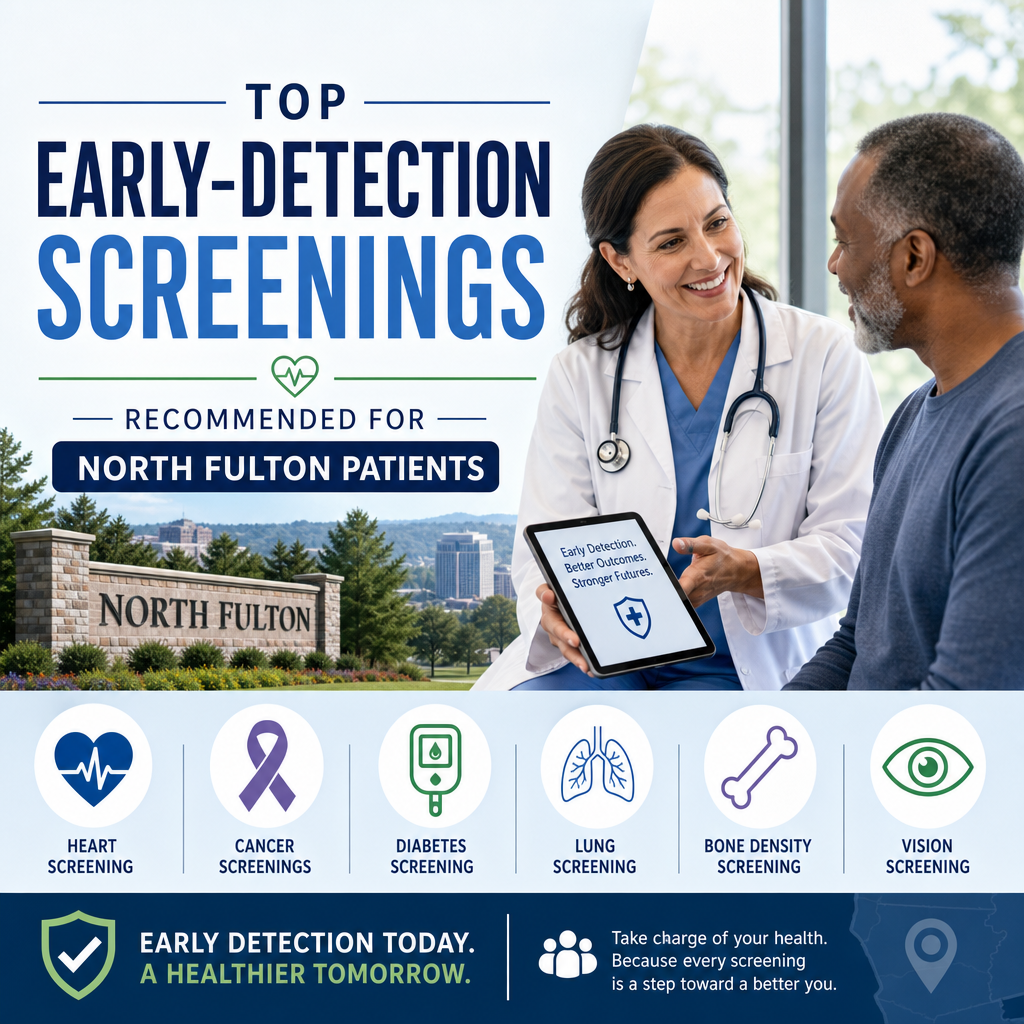
Top Early-Detection Screenings Recommended for North Fulton Patients
Early detection can make a major difference in long-term health. For North Fulton patients, staying current with preventive care is one of the most practical ways to catch problems early, start treatment sooner, and reduce the risk of serious complications.
From heart disease to cancer to diabetes, many common conditions develop quietly. The right screenings help identify warning signs before symptoms become hard to ignore.
Why Early-Detection Screenings Matter
Preventive screenings are designed to find health concerns at an early, more treatable stage. In many cases, they can even help prevent disease from developing or progressing.
For North Fulton patients, regular screening is especially important because busy schedules often push routine care to the bottom of the list. Annual wellness visits and age-appropriate testing can help keep health on track.
Heart and Metabolic Health Screenings
Heart disease and diabetes remain two of the most common chronic health issues in the U.S., which is why these screenings are among the top early-detection screenings recommended for North Fulton patients.
Blood Pressure Checks
High blood pressure often has no obvious symptoms, but it can increase the risk of heart attack, stroke, and kidney disease. Adults should have their blood pressure checked regularly, especially during annual physicals.
Cholesterol Screening
A lipid panel measures cholesterol and triglyceride levels. High cholesterol can quietly build up in the arteries over time, raising the risk of cardiovascular disease. Screening frequency depends on age, family history, and other risk factors.
Blood Glucose or A1C Testing
Diabetes and prediabetes can go unnoticed for years. A fasting blood glucose test or A1C test can help identify elevated blood sugar early. Patients who are overweight, have a family history of diabetes, or have high blood pressure may need testing more often.
Cancer Screenings to Prioritize
Cancer screening recommendations vary based on age, sex, family history, and personal risk. Still, several tests are widely considered essential.
Breast Cancer Screening
Mammograms are one of the most effective tools for early breast cancer detection. Many women begin screening in midlife, though some may need earlier testing if they have a strong family history or genetic risk factors.
Cervical Cancer Screening
Pap tests and HPV testing can detect abnormal cell changes before cervical cancer develops. These screenings are important for many women well into adulthood and should follow current clinical guidelines.
Colorectal Cancer Screening
Colon cancer often develops slowly and may not cause symptoms right away. Screening options can include:
- Colonoscopy
- Stool-based tests
- Flexible sigmoidoscopy in some cases
Many adults are advised to begin colorectal cancer screening at age 45, though higher-risk patients may need earlier evaluation.
Prostate Cancer Discussions
For men, prostate cancer screening is not always one-size-fits-all. A conversation with a healthcare provider about PSA testing can help determine whether screening is appropriate based on age, race, and family history.
Lung Cancer Screening
Current or former heavy smokers may qualify for annual low-dose CT scans to screen for lung cancer. This test can be especially valuable for catching cancer before symptoms begin.
Bone, Vision, and Hearing Screenings
Not all important screenings are for life-threatening illness. Some are vital for preserving mobility, independence, and quality of life.
Bone Density Testing
Bone loss can happen silently over time, especially in older adults and postmenopausal women. A bone density scan can identify osteopenia or osteoporosis before a fracture occurs.
Eye Exams
Routine eye exams can detect more than vision changes. They may also identify glaucoma, cataracts, diabetic eye disease, and signs of high blood pressure. Adults with diabetes or a family history of eye disease should be especially proactive.
Hearing Evaluations
Hearing loss often develops gradually, making it easy to overlook. Screening can help detect early changes and improve communication, safety, and overall well-being.
Skin Checks and Preventive Exams
North Fulton patients who spend a lot of time outdoors should not ignore skin health. Skin cancer can appear in subtle ways, and early evaluation of unusual moles or spots is important.
A provider may recommend:
- A full-body skin exam
- Monitoring changes in moles
- Follow-up visits for suspicious lesions
Routine preventive exams also give primary care providers a chance to assess weight, lifestyle habits, sleep, stress, and family history, all of which influence screening decisions.
How Often Should You Be Screened?
There is no single schedule that fits everyone. The best timing depends on factors such as:
- Age
- Sex
- Family history
- Existing medical conditions
- Smoking history
- Personal risk factors
That is why personalized care matters. A primary care provider can build a screening plan based on current guidelines and individual health needs.
Taking the Next Step
The top early-detection screenings recommended for North Fulton patients are not just about checking boxes. They are about protecting future health, catching concerns before they become serious, and creating a clear plan for prevention.
If it has been a while since your last wellness visit, now is a good time to review which screenings you may be due for. A simple appointment today can lead to earlier answers, better treatment options, and greater peace of mind tomorrow.