

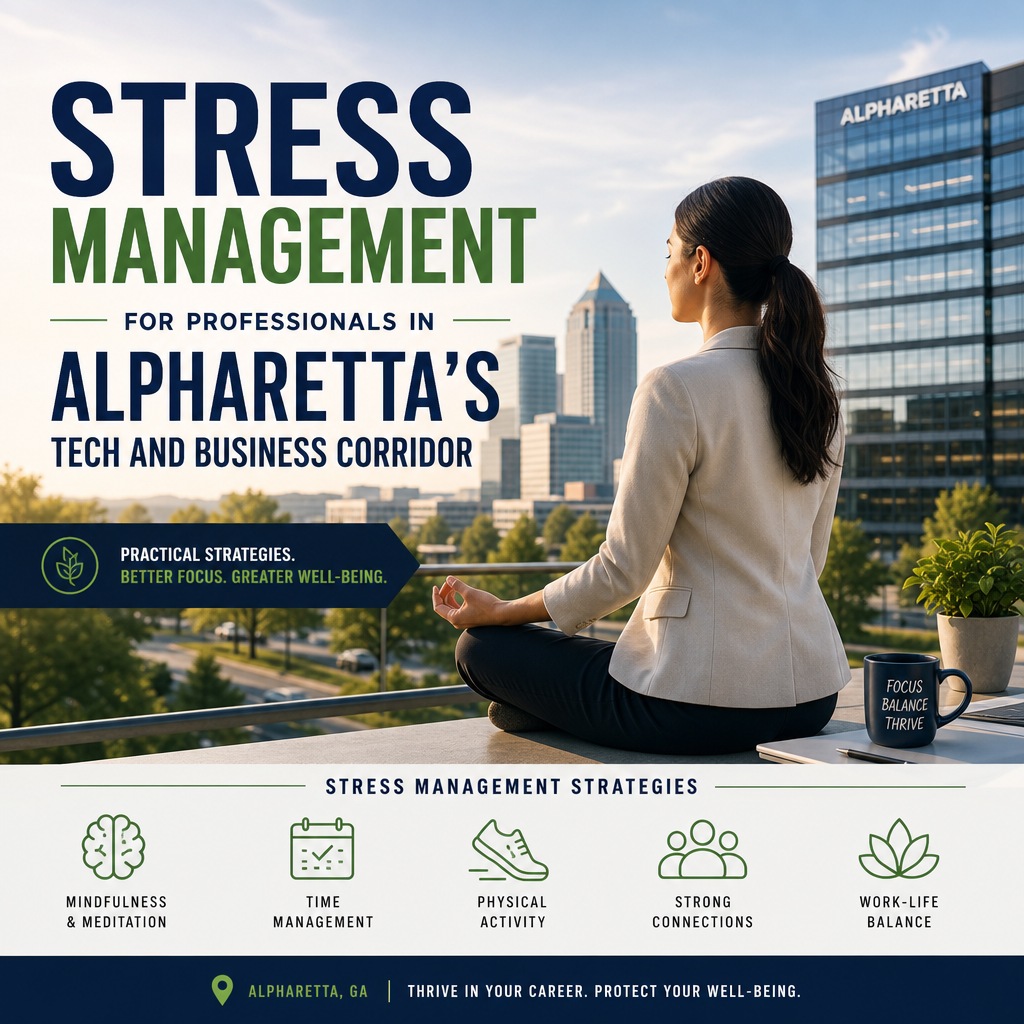
Stress Management for Professionals in Alpharetta’s Tech and Business Corridor
Stress Management Strategies for Professionals in Alpharetta’s Tech and Business Corridor
Alpharetta’s tech and business corridor is known for innovation, fast growth, and opportunity. It is also a place where long workdays, constant connectivity, and high expectations can create real pressure. For many professionals, stress can build quietly until it begins affecting focus, sleep, productivity, and overall health.
The good news is that effective stress management strategies for professionals in Alpharetta’s tech and business corridor do not need to be complicated. Small, consistent habits can make a major difference.
Why Stress Builds So Quickly in High-Performance Work Environments
Professionals in technology, finance, operations, sales, and leadership often face a mix of demands at once:

- Tight deadlines
- Back-to-back meetings
- Hybrid or remote work challenges
- Pressure to stay available after hours
- Competition and performance goals
In fast-moving business settings, it is easy to normalize stress. But when stress becomes constant, it can lead to burnout, irritability, decision fatigue, and lower job satisfaction.
Recognizing that stress is not just “part of the job” is the first step toward managing it better.
Start With Better Daily Boundaries
One of the most practical stress management strategies is creating clearer boundaries around work. In a connected workplace, many professionals feel like they are always on call. Over time, that constant access can reduce mental recovery.
Simple ways to set boundaries
- Turn off nonessential notifications after work hours
- Block focused work time on your calendar
- Avoid checking email first thing in the morning or late at night
- Take a real lunch break away from your desk
Boundaries are not about doing less. They are about protecting the energy you need to perform well over the long term.
Use Short Recovery Breaks During the Day
Many professionals wait until they feel overwhelmed before stepping away. A better approach is to schedule short reset points before stress peaks.
Even five minutes can help regulate your nervous system and improve concentration.
Quick recovery habits to try
- Step outside for fresh air
- Do a brief walk between meetings
- Stretch your neck, shoulders, and back
- Practice slow breathing for two minutes
- Drink water and pause before switching tasks
In Alpharetta’s busy corporate environment, these small pauses can help reduce the cumulative effects of mental overload.
Manage Your Calendar, Not Just Your Tasks
A full task list is stressful, but a poorly managed calendar often creates even more pressure. When every hour is booked, there is no room for problem-solving, creative thinking, or unexpected issues.
Build a more realistic workday
Try these scheduling habits:
- Group similar tasks together
- Leave buffer time between meetings
- Reserve at least one block for deep work
- Identify your top three priorities each morning
- Say no to low-value commitments when possible
Professionals who manage their time intentionally often feel more in control, even during demanding seasons.
Support Stress Management With Physical Habits
Stress is not only mental. It shows up physically through tension, poor sleep, headaches, fatigue, and difficulty focusing. That is why physical wellness plays a key role in stress reduction.
Foundational habits that matter
- Get consistent sleep whenever possible
- Move your body most days of the week
- Limit excess caffeine when stress is already high
- Eat regular meals instead of skipping them during busy days
You do not need a perfect routine. What matters most is consistency. A short walk before work, a healthier lunch choice, or an earlier bedtime can improve resilience over time.
Create a More Supportive Work Culture
Stress management is not only an individual responsibility. Team culture matters. In high-pressure offices, employees often hesitate to speak up because they do not want to seem uncommitted. That silence can increase stress and isolation.
Managers and team leaders can help by:
- Encouraging realistic deadlines
- Respecting time off
- Normalizing breaks
- Checking in on workload, not just performance
- Modeling healthy work habits themselves
When leaders support sustainable performance, teams often become more productive, engaged, and loyal.
Know When to Ask for Professional Support
Sometimes stress goes beyond what a few lifestyle changes can fix. If you are experiencing ongoing anxiety, sleep disruption, emotional exhaustion, or trouble functioning at work, outside support may be the right next step.
Therapists, counselors, coaches, and employee assistance programs can provide practical tools for coping with workplace stress. Seeking support is not a weakness. It is a proactive way to protect your health and career.
A Smarter Approach to Professional Success
Success in Alpharetta’s growing business community does not have to come at the expense of your well-being. The most effective stress management strategies for professionals in Alpharetta’s tech and business corridor focus on sustainable habits, realistic boundaries, and intentional recovery.
If stress has started to feel normal, it may be time to make a change. Small actions taken consistently can improve clarity, energy, and performance. In a fast-moving professional environment, managing stress well is not just good for your health—it is a smart business skill.